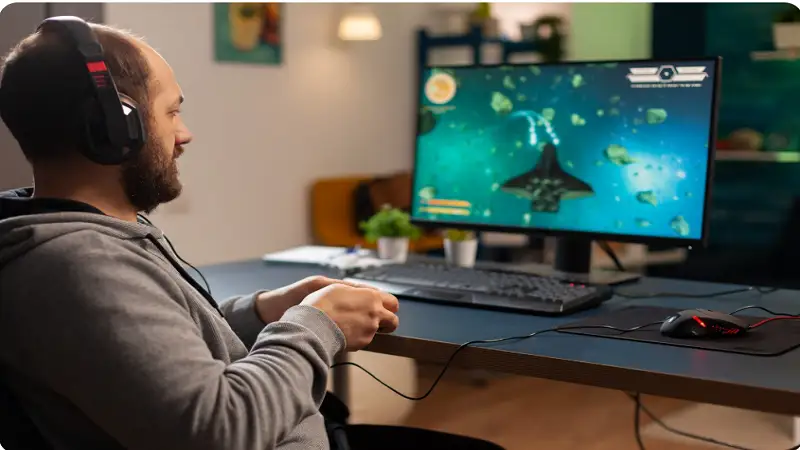
Gaming has become a popular form of entertainment for people of different ages. Whether you enjoy action games, sports titles, strategy games, racing games, or multiplayer adventures, improving your skills can make every session more enjoyable. Good gaming is not only about having fast reflexes. It also involves practice, patience, strategy, communication, and understanding how a particular game works.
Many players focus only on winning, but long-term improvement comes from learning from mistakes and developing consistent habits. Small changes in your gaming routine can improve your performance and help you enjoy games without unnecessary frustration.
1. Understand the Game Before Playing
One of the most useful gaming habits is learning the basic rules before trying to master a game. Every game has different objectives, controls, mechanics, and strategies. Spending some time understanding these elements can save you from making repeated mistakes.
Read the instructions, explore the settings, and try the tutorial if the game provides one. Tutorials often explain important mechanics that may become useful later. You should also understand the objectives of different game modes.
For example, a team-based game may require cooperation rather than individual performance. A strategy game may reward careful planning, while a racing game may require knowledge of tracks and vehicle control.
Understanding the game gives you a strong foundation and makes practice more effective.
2. Practice Regularly
Practice is one of the most important parts of improving gaming skills. You do not need to spend many hours playing every day. Instead, focus on consistent and purposeful practice.
If you are trying to improve your aim, spend some time practicing accuracy. If movement is difficult, concentrate on movement techniques. Players who identify their weaknesses can use practice sessions more effectively.
The key is to avoid playing automatically without thinking about improvement. After each session, consider what went well and what could have been better.
This approach turns ordinary gaming sessions into learning opportunities.
3. Improve Your Hand-Eye Coordination
Many games require players to react quickly to objects, opponents, or changes on the screen. Hand-eye coordination can therefore have a major effect on performance.
You can improve coordination through regular gameplay and exercises that require quick reactions. Start slowly and focus on accuracy before trying to increase speed.
Using comfortable controls can also make a difference. Your mouse, keyboard, controller, or touchscreen should feel natural and responsive. Experiment with sensitivity settings until you find a configuration that allows you to control movements comfortably.
Do not constantly change your settings. Once you find a comfortable setup, give yourself enough time to become familiar with it.
4. Learn From Your Mistakes
Every player makes mistakes. Even experienced gamers sometimes lose matches or make poor decisions. Instead of becoming frustrated, try to understand why the mistake happened.
For example, ask yourself whether you moved too early, ignored an opponent, used the wrong strategy, or failed to communicate with teammates.
One of the most useful gaming tips pblinuxtech is to treat mistakes as information rather than failure. A mistake can show you exactly what needs improvement.
Watching replays can also help. When you watch a previous match, you may notice decisions that were difficult to recognize while playing.
5. Choose Comfortable Controls
Comfort is important during gaming sessions. Poor control settings can make a game unnecessarily difficult.
Adjust key bindings, controller layouts, mouse sensitivity, and other available options according to your preferences. Some players prefer higher sensitivity for quick movements, while others prefer lower sensitivity for greater control.
There is no universal setting that works perfectly for everyone. The best configuration is the one that feels comfortable and allows you to perform actions accurately.
You should also keep your gaming equipment clean and properly maintained. A responsive mouse, keyboard, or controller can make the gaming experience smoother.
6. Manage Your Gaming Time
Gaming can be enjoyable, but spending too much time playing without breaks can lead to tiredness and reduced concentration.
Take regular breaks during longer sessions. Stand up, stretch, drink water, and give your eyes a chance to rest.
Gaming for several hours does not automatically mean you will improve faster. When you become tired, your reactions and decision-making may become less effective.
A balanced routine allows you to enjoy gaming while maintaining focus and energy.
7. Learn the Game Map
In many multiplayer and competitive games, understanding the map can provide a major advantage. Learn important locations, routes, obstacles, resources, and commonly used areas.
Knowing where important items are located can help you make faster decisions. You can also learn alternative routes that may be useful when the main path is blocked or dangerous.
Map knowledge becomes especially valuable when playing against experienced opponents because it helps you predict possible movements.
Spend some time exploring maps even when you are not playing a competitive match. Familiarity develops naturally through repeated practice.
8. Communicate With Your Team
Teamwork is essential in multiplayer games. Individual skill is useful, but good communication can make a team much more organized.
Use clear and simple communication. Tell teammates about important information such as an opponent’s location, available resources, or changes in the situation.
Avoid unnecessary arguments or negative communication. A calm team can make better decisions than a group of players who are constantly blaming one another.
Good communication also means listening. Pay attention to useful information from teammates and coordinate your actions when necessary.
9. Develop Better Decision-Making
Fast reactions are helpful, but good decisions are often more important. A player who thinks carefully can sometimes defeat an opponent with faster reflexes.
Before taking action, consider the possible results. Ask whether an aggressive move is necessary or whether waiting would create a better opportunity.
In strategy-based games, think several steps ahead. In action games, learn when to attack and when to defend.
Another useful gaming tips pblinuxtech principle is to avoid making emotional decisions after losing. Frustration can cause players to take unnecessary risks. Staying calm helps you evaluate situations more clearly.
10. Watch Skilled Players
Watching experienced players can help you discover new strategies. Professional players and skilled content creators often demonstrate techniques that beginners may not know.
When watching gameplay, do not only focus on exciting moments. Pay attention to positioning, movement, timing, resource management, and decision-making.
Try to understand why a player makes a particular decision rather than simply copying the action.
You can then test useful techniques in your own games. Some strategies may work differently depending on your skill level, so practice is important before using them in competitive situations.
11. Keep Your Gaming Setup Comfortable
A comfortable gaming environment can help you stay focused. Your chair should provide reasonable support, and your screen should be positioned comfortably.
Good lighting can reduce unnecessary eye strain. Keep frequently used equipment within easy reach and maintain a clean playing area.
Headphones can also help players hear important audio cues in games. However, keep the volume at a comfortable level to protect your hearing.
A good setup does not have to be expensive. Comfort and practicality are generally more important than having the most expensive equipment.
12. Stay Calm During Difficult Matches
Competitive gaming can sometimes become stressful. Losing several matches in a row may make players frustrated, which can negatively affect their performance.
If you notice that you are becoming angry or overly frustrated, take a short break. Returning to the game with a clear mind can be more productive than continuing while upset.
Remember that losing is part of learning. Instead of focusing only on the final result, look at what you learned during the match.
Patience is especially important for beginners because improvement usually happens gradually.
13. Use a Simple Improvement Routine
A structured routine can make improvement easier. Start by selecting one or two skills that you want to develop.
For example, you could spend ten minutes practicing movement, play several matches while focusing on positioning, and then review your mistakes.
Do not try to improve everything at once. Concentrating on a small number of skills makes progress easier to recognize.
You can also keep simple notes about recurring problems. If you repeatedly make the same mistake, identifying the pattern can help you create a solution.
14. Balance Fun and Competition
Gaming should remain enjoyable. Competitive improvement is valuable, but constantly worrying about performance can remove the fun from the experience.
Play different types of games, try new modes, and spend time with friends when possible. Not every session needs to be focused on winning.
Another useful gaming tips pblinuxtech idea is to measure progress against your previous performance instead of comparing yourself constantly with other players. Your goal should be gradual improvement.
15. Protect Your Account and Personal Information
Online gaming also requires basic digital safety. Use a strong and unique password for your gaming account and enable additional security features when available.
Never share passwords, verification codes, or private account information with strangers.
Be careful with suspicious links, unofficial downloads, and messages offering free rewards. Scammers sometimes use attractive gaming offers to trick players into giving away account information.
Keeping your account secure protects your progress and personal information.
Conclusion
Improving at gaming does not require talent alone. Consistent practice, good decision-making, map knowledge, communication, comfortable controls, and a calm attitude can all contribute to better performance.
The most important thing is to enjoy the process. Learn from mistakes, practice specific skills, take regular breaks, and avoid becoming discouraged by losses. With patience and a sensible routine, players can gradually become more confident and capable.
Whether you play casually or competitively, these gaming tips pblinuxtech principles can help you develop better habits and make your gaming sessions more enjoyable. Focus on steady progress rather than immediate perfection, and remember that every match can provide an opportunity to learn something new. See More